Monday, February 21, 2022

Working with Red

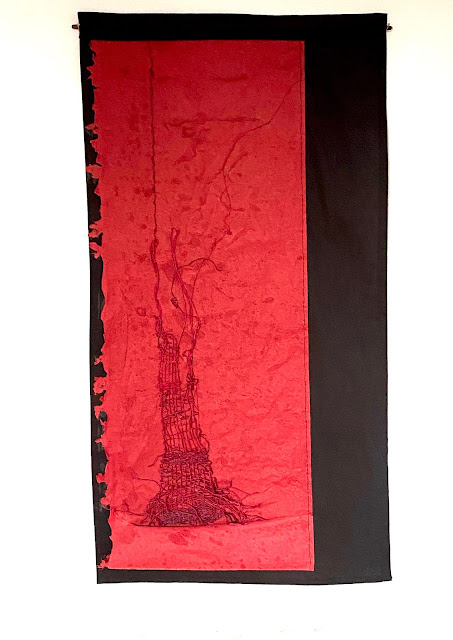
 I have made red paper, which is unusual for me.


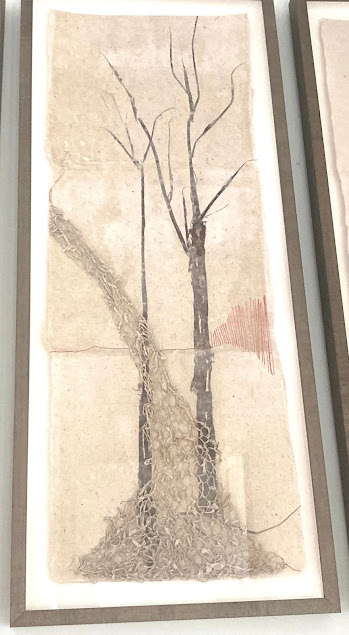
I was compelled to use red because of my alarm about what is going on in our environment. Trees are being destroyed by wildfire and misuse and I don't know what to do about it. So I make art.

"Alarm"

    "Distress"


Thursday, February 10, 2022

Cotton

 This is a series about cotton as a crop.  In thinking about cotton here I am thinking of slavery, exploitation, greed and the need to talk about this. The threads are made of spun paper. 


Black Cotton


Red Cotton


Green Cotton


Cotton and Dinner Conversations


Cotton


Wednesday, February 9, 2022

Trees


These works are made of handmade paper, with bark inclusions from eleagnus, a forest invasive. The work includes spun paper thread. Uncertain Ground Between Steel and Tree includes a steel rebar on the left. 

Uncertain Ground 

Between Steel and Tree


                       Bound Tree


Fire Tree


Ghost Tree


Saturday, January 8, 2022

An Essay

WORKING WITH PAPER


Papermaking is a wet process of transforming plant fibers into the familiar dry, receptive surface.  Paper, like many things, is a process before it is a product.  My art streams from the process which flows through two conceptual branches. 


One branch runs through paper’s origins in nature, and through thoughts about the natural environment within which our lives are embedded. I grow my fiber. The bark of paper mulberry is stripped, the inner bark is cleaned, and then it is cooked, beaten and formed on a screen. Engagement with nature is essential to us all, and even small things, like fibers have big influences. Because of small things with huge environmental importance I have a body of work that was formed, in part, through the activities of insects - honeybees in one case, and red wiggler composting worms in another. The processes of the insects were essential to the final artistic product. 


The other branch runs through the pages of human culture. Paper is written on. Paper supports history, stories, musical notation, drawings, art…and has other more mundane uses. In this case the cultural burden resided primarily on my southern grandmother's journal. When I got that journal, it had been shredded, as she wished. I turned the pages back on themselves and they disappeared again into paper pulp.  I used the material remains to create art specific to my grandmother. In later work l looked back at that work and at family as a process of cultural inheritance moving forward to influence our present. I reworked some of the old pieces and pressed forward with new work looking at current racial issues entangled in my own southern heritage.


These two conceptual branches flow together somewhere between the hard realities of natural disaster and the disastrous realities of white supremacy - the latter because of the implications of race related to my own present, and the former because no matter how peaceful and cyclical the process of paper making may be, we, as humans, are slamming headlong into a confrontation with the cycles of nature.


Thursday, February 25, 2021

Two silhouettes


The two pieces I will talk about are similar in material, handmade paper, but they came from two different places in my thinking.  
The first set of images are of a piece called Shadow and Tree The narrow scroll down the middle was cut from the initial long piece of paper. and woven with paper thread.  The shadow drawn on the whole scroll is from a tracing of my elongated shadow on the ground in the late afternoon.  I was thinking about the tall verticality of the central woven scroll as a tree cutting through the human shadow. The human shadow on this planet is menacing the survival of our species. But the planet, and the trees, will outlast us.  The scroll continues past the shadow and the story can (and I hope will) change.
The second set of images are from a piece called Anticipation. The silhouette is from a photo of a young girl waiting patiently. The piece is quilted with the word WAIT sewn four times.
I was thinking about the long history of black descendants of enslaved peoples in this county being told over and over again to wait, we white Americans aren't ready for that (many 'thats') yet. Society (white society) will be ready later.

I have yet to tie together the threads of nature and racism in my art making. I know there are many connections, but here they are just side by side.

Shadow and Tree


Anticipation


"Trunk of Old Papers"

Juried Exhibit Atlantic Gallery NYC 2021


Trunk of Old Papers is a reworking and rethinking of an older piece that was part of a solo exhibit called The Journal Project mounted in 2000.  I have mentioned both the reworking and the reflecting on the works in the show in 2000 in a previous post.  This work is a reflection on the personal opening of old trunks of memory. It is made of handmade paper that includes the shreds of my grandmother's journals.  My reflections revolve around an awareness of a family history that is connected to a period  in the South (and elsewhere) to the devaluation of African Americans.  Contemporary events that expose the horrors of that devaluation have prompted me to revisit my own work.
             
                            
Detail with old paper and new paper emerging from the side.


Friday, March 27, 2020

Slave Narratives and Old Lace

This series of boxes emerged from an installation I exhibited in 2000 called 'The Journal Project'. The boxes here contain artifacts from a part of that installation called 'Prayer Fags' which began as an homage to my grandmother. The shreds of texts you can see in some of the paper are from her journals. That she came from South Carolina is a fact that I embraced over time. I mostly avoided my connection to the South because of its connection to enslavement. The scrolls that are added to the boxes are from 285 individual narratives collected from South Carolina by the Federal Writers Project in the late 1930's. In important ways I grew from the nostalgia embraced in 'The Journal Project' to embracing my past in this collection of boxes called 'Slave Narratives and Old Lace'.


I tatted yards and yards of this kind of lace in honor of my South Carolina grandmother, who tatted for as long as I knew her. Tatting is a long series of slip knots. I didn't think of the more horrid version of a slip knot in the South which hung bodies in the air.

There were six boxes exhibited in this image from a show with the Raleigh Fine Art Society in 2020.  There are a total of seven boxes that where hung in a single row at the Ohio Craft Museum also in 2020.
                     
                         Slave Narratives and Old Lace from Raleigh NC show.


Slave Narratives and Old Lace from the Columbus Ohio show.


Box# 1 of series Slave Narratives and Old Lace


Box#2 of series Slave Narratives and Old Lace


Box#3 of series Slave Narratives and Old Lace


Box#4 of series Slave Narratives and Old Lace


Box#5 of series Slave Narratives and Old Lace


Box#6 of series Slave Narrative and Old Lace


Box# 7 of series Slave Narratives and Old Lace


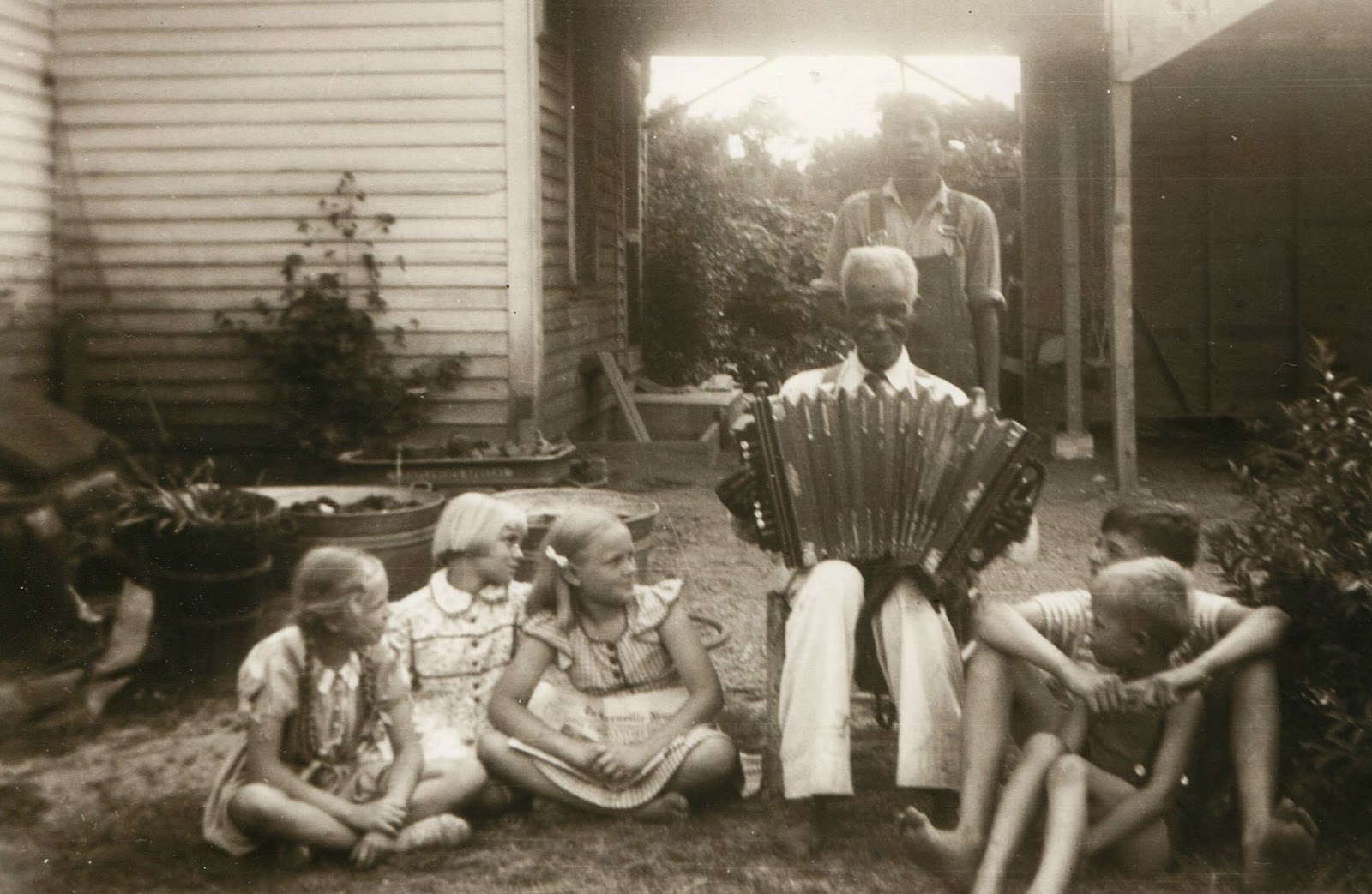
Two of the small narrative scrolls are from ‘Uncle Mad’, as grandmother and her children called him. His name was Madison Griffin. She took a photo of him sitting in a chair with her small children sitting at his feet while he ".....told us about being born a slave and who were the kind masters and who were not.”   How many European Americans still see themselves as masters?


I