Thursday, February 25, 2021

Two silhouettes


The two pieces I will talk about are similar in material, handmade paper, but they came from two different places in my thinking.  
The first set of images are of a piece called Shadow and Tree The narrow scroll down the middle was cut from the initial long piece of paper. and woven with paper thread.  The shadow drawn on the whole scroll is from a tracing of my elongated shadow on the ground in the late afternoon.  I was thinking about the tall verticality of the central woven scroll as a tree cutting through the human shadow. The human shadow on this planet is menacing the survival of our species. But the planet, and the trees, will outlast us.  The scroll continues past the shadow and the story can (and I hope will) change.
The second set of images are from a piece called Anticipation. The silhouette is from a photo of a young girl waiting patiently. The piece is quilted with the word WAIT sewn four times.
I was thinking about the long history of black descendants of enslaved peoples in this county being told over and over again to wait, we white Americans aren't ready for that (many 'thats') yet. Society (white society) will be ready later.

I have yet to tie together the threads of nature and racism in my art making. I know there are many connections, but here they are just side by side.

Shadow and Tree


Anticipation


"Trunk of Old Papers"

Juried Exhibit Atlantic Gallery NYC 2021


Trunk of Old Papers is a reworking and rethinking of an older piece that was part of a solo exhibit called The Journal Project mounted in 2000.  I have mentioned both the reworking and the reflecting on the works in the show in 2000 in a previous post.  This work is a reflection on the personal opening of old trunks of memory. It is made of handmade paper that includes the shreds of my grandmother's journals.  My reflections revolve around an awareness of a family history that is connected to a period  in the South (and elsewhere) to the devaluation of African Americans.  Contemporary events that expose the horrors of that devaluation have prompted me to revisit my own work.
             
                            
Detail with old paper and new paper emerging from the side.


Friday, March 27, 2020

Slave Narratives and Old Lace

This series of boxes emerged from an installation I exhibited in 2000 called 'The Journal Project'. The boxes here contain artifacts from a part of that installation called 'Prayer Fags' which began as an homage to my grandmother. The shreds of texts you can see in some of the paper are from her journals. That she came from South Carolina is a fact that I embraced over time. I mostly avoided my connection to the South because of its connection to enslavement. The scrolls that are added to the boxes are from 285 individual narratives collected from South Carolina by the Federal Writers Project in the late 1930's. In important ways I grew from the nostalgia embraced in 'The Journal Project' to embracing my past in this collection of boxes called 'Slave Narratives and Old Lace'.


I tatted yards and yards of this kind of lace in honor of my South Carolina grandmother, who tatted for as long as I knew her. Tatting is a long series of slip knots. I didn't think of the more horrid version of a slip knot in the South which hung bodies in the air.

There were six boxes exhibited in this image from a show with the Raleigh Fine Art Society in 2020.  There are a total of seven boxes that where hung in a single row at the Ohio Craft Museum also in 2020.
                     
                         Slave Narratives and Old Lace from Raleigh NC show.


Slave Narratives and Old Lace from the Columbus Ohio show.


Box# 1 of series Slave Narratives and Old Lace


Box#2 of series Slave Narratives and Old Lace


Box#3 of series Slave Narratives and Old Lace


Box#4 of series Slave Narratives and Old Lace


Box#5 of series Slave Narratives and Old Lace


Box#6 of series Slave Narrative and Old Lace


Box# 7 of series Slave Narratives and Old Lace


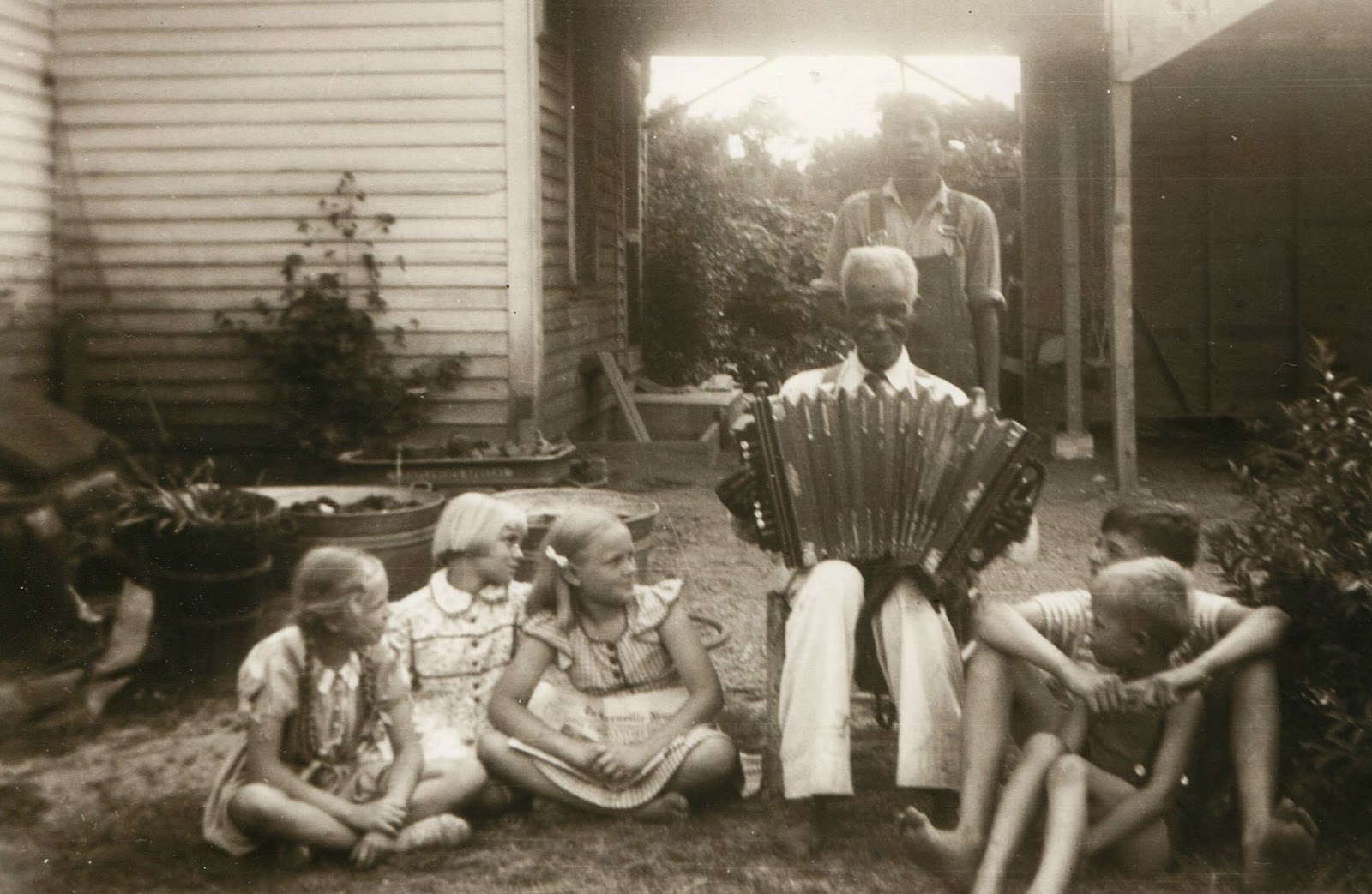
Two of the small narrative scrolls are from ‘Uncle Mad’, as grandmother and her children called him. His name was Madison Griffin. She took a photo of him sitting in a chair with her small children sitting at his feet while he ".....told us about being born a slave and who were the kind masters and who were not.”   How many European Americans still see themselves as masters?


I

Thursday, August 2, 2018

Pencil & Paper


Pencil and Paper was an exhibit I did with Katherine Cox to put my tactile paper next to her beautiful pencil drawings.  Our idea was to have a quiet gallery space to contemplate simple things that are evocative.  It is a time in our country where loudness, violence, and disruption are all around us.  This is a moment to take a breath.
Ground Swelling
Ancestor Nest

Artist Statement

Marks, made on paper….
Paper, the receptive understatement….
My work begins in the initial space where fibers float and fall.
Water sloshes and fibers settle randomly on the surface of the papermaker’s screen. Fibers become their own surface, dry, still, enclosing and receiving.

I have never gotten over the magic of the process. Paper, beginning with plant and water, offers itself to industry, to the writer and to the artist. As I work with paper, expressive forms come to me from nature to culture, from paper to personal history.  When I make mulberry paper, I harvest long branches. I steam them until I can peel away the warm bark.  It is brown on the outside, but the inner bark is lustrous. I cook the ivory colored inner bark until it is soft. It comes loose into fibers that float in water. 

As I work I draw on paper’s capacity, wet and dry, to enfold and reveal. 

Anticipation


This wall has drawings by Katherine Cox and two pieces of mine called 'Cells' and 'Still'.


Shell


Friday, July 13, 2018

Nostalgia and Invisible Racism

Nostalgia and Invisible Racism

The title of this exhibit weaves three threads of thought. On one thread I was thinking about invisibility and race. I read, and copied onto handmade paper the text of the novel ‘Invisible Man’ by Ralph Ellison, about the many ways a black man can be rendered invisible in society.  Another thread was about racism invisible to the ones who hold it.  They either deny that it exists in them or really don’t see it.  The third thread was about nostalgia, the kind that looks back on pleasant memories while overlooking brutal history and racial injustice.  Nostalgia in the white South is a feature that is familiar to me.

I look back fondly on family dinner table arguments.  I valued our ability to talk about issues of the time even though they contained sentences like “society is not ready for integrated swimming pools yet”.  I could disagree without feeling the kind of despair and outrage that I feel today over yet another black body shot or incarcerated. Can the one be implicated in the other?  Does nostalgia contain an abeyance of responsibility?

I look back to memories like watching heavy rain through dark green trees surrounding my grandmother's screened porch in Atlanta. In a drawer somewhere is a letter proudly describing a long ago cousin who rode with the Red Shirts and how he raced on horseback to vote in three different polling places to help install Wade Hampton as governor of South Carolina in 1876.  Both of my parents were born and brought up in South Carolina. My great grandmother’s sisters sewed for the Red Shirts.  I grew up with these stories.

The work of this exhibit uses paper I made from the pulp of my grandmother’s journals.  The text of ‘Invisible Man’ pushes its way into this paper toward an undulating water stain. On the opposite wall more papers hang from a tatted thread. They are weighted with small scrolls bearing texts of South Carolina slave narratives. The wistful beauty of the paper bears scars barely hinted.  Much hangs in the balance.


detail, from chapter 4

Artist Statement, as mounted in the exhibit.

The soil of South Carolina has a place in my soul. To make peace with the South and my whiteness I have dug into layers of sentimentality tilled into the garden of family stories. Nostalgia can be dangerous. The sentimentality of the “Lost Cause” blurred the brutal foundations of the Southern economy. I think of a great great-grandfather who farmed the soil of the old South. I think about the soils of land and property, ownership of land and ownership of human beings. I conflate the words ‘soil’ and ‘soul’ in a reflection of the tangle of affections and cruelties embedded in the heritage of the American South. My emotional landscape with regard to my family’s legacy is fraught with contradictions just as America’s landscape is fraught with injustices. Healing will require tilling through thick layers of white nostalgic sentiments and turning under ingrained crops of racial animus. We must explore the present character of racist thinking before we can grow new crops and new possibilities.


‘INVISIBLE MAN’ Series

Text from Ralph Ellison's "Invisible Man" is written to the edge of a water stain on paper made from a southern matriarch's pulped journals

The Southern heritage is mine.  The journal shreds in the paper are my grandmother's.  The inherited repercussions of slavery and racism belong to America as a whole.  .


"Uncle Mad"  detail


The note, in my grandmother's handwriting, reads:

From the left Ann, Libby, Kitty Lewis, "Uncle Mad",  Billy & Robert Lewis.
In the back of Uncle Mad is our cook's (Clara Johnson) brother Tom (I think) who helped in the garden.
We were listening as Uncle Mad (age ?) played the accordion and told us about being born a slave & who were the kind masters and who were not.


'Prayers and Debts'

The little hanging scrolls each represent one of the 285 slave narratives collected in South Carolina during the Works Progress Administration’s Writers Project in the late 1930’s.


Friday, July 6, 2018

Roots


ROOTS 
Paper Circle  Nelsonville, Ohio  Mar./Apr. 2016

Plants take center stage as I explore cultural roots and dig into the organic nature of life.

As a papermaker I always enjoy using fibers from a plant I have harvested myself.  Its proximity to the soils I stand on offers special resonance. I was offered an opportunity to make paper from an okra crop on my neighbor’s farm in North Carolina and I spent lovely hours harvesting.

The okra plant itself has a quirky resonance with my own family roots in South Carolina. When I first learned how to make paper years ago, I embedded an okra root in a paper artwork. I called it “a root for my grandmother” because she had told her daughter, my mother, that in moving all over the place the way Army dependents do, she was raising rootless children.  At the time I made the work I was being a little flippant. But some underlying reverence led me to treasure this gestural paper for years.  I do still wonder what makes good roots?

Paper is a loaded medium, I think of books, literature, and art, but paper also references ordinary cultural objects like cardboard and toilet paper and so much more. I love the metaphorical richness of paper. My passion for papermaking is intimately connected to plants and natural processes, and to paper’s role as a medium of human expression.

This exhibit is a ‘sketchbook’, prompted by an exploration of okra fiber and a renewed focus on my own generational roots in the South. I wonder what makes strong cultural roots. In this age of migration, how do people care for their cultural nourishment? 


'A Root for My Grandmother


Okra as a formation aid.

In Japanese tradition methods of papermaking
a substance is added to the vat to slow down drainage.  The papermaker has time to form a
smooth and evenly dispersed sheet of paper,
hence the term 'formation aid'.

Formation aid is traditionally made from the
root of a plant called taroro aoi. It's Latin name
is Abelmoschus manihot, in the mallow family,
Malvaceae.  It is closely related to our familiar
okra, Abelmoschus esculentus.

The tendency of okra to be viscous and slippery can also be used to good effect in forming a sheet of paper. Here I have soaked some frozen okra and am squeezing the thickened water into my vat. The wet sheet on the screen is made of okra fiber.


 'A Butterfly Effect'

Okra root, thread, and paper.


A butterfly effect in physics is a phenomenon
where a small variation in one area of a complex system can have larger effects elsewhere.
The title for this piece happened for the simple reason that the root that is painted black hangs from a butterfly clip.

In 'A Butterfly Effect'  I have used paper as a personal anchor, tenuous as that might be. 
It is a fragile, suspended moment like my feeling of rootlessness. The one floating page was made of pulped journals.  The other has a curved line of journal text emerging from an ink blot.  Inked threads spill from a brush visually connecting the two.


The larger effects within a complex world are still playing out.